

Click to subscribe on: Apple / Spotify / Amazon / YouTube / Rumble
In the 365 days following the events of Oct. 7, the situation in the Middle East is as complicated as ever. Israel’s genocide in Gaza agonizingly continues, and its invasion of Lebanon and subsequent retaliation at the hands of Hezbollah and Iran has added more fuel to the fire. Tensions are escalating and Middle East expert and writer Juan Cole joins host Robert Scheer on this episode of the Scheer Intelligence podcast to explain its precedent and what the future may hold.
The extremism of the Netanyahu cabinet in Israel, Cole explains, is the basis for the sharp increase in violence and tension in the region. While the Israeli government justifies their actions as necessary for the protection of Jews in the region, Cole argues their actions do the opposite. “The extreme goals of Netanyahu to completely control the lives of people in Gaza and the West Bank and Lebanon are endangering the lives of ordinary Jews. They’re not making them safer,” he says.
The attempted expansion into Lebanon, which has brought global attention to the country, is something seen before in the recent history of Israel, Cole says. “It’s 1982 all over again. 1982 was an enormous failure, and it produced more radicalization and more headaches in the long term for Israel,” he tells Scheer.
Despite their claims of self-defense against “terrorist” organizations like Hezbollah, Cole explains that much like Hamas, Hezbollah’s rise was a direct consequence of Israeli policies. “The Israelis occupied 10% of Lebanese soil, southern Lebanon, for 18 years. And the Lebanese wanted them right back out of their country,” he explains.
“The Shiites of southern Lebanon, who nobody ever heard of… before Israel occupied that area, threw up these resistance movements like Hezbollah. It was Israel that radicalized the Shiites of southern Lebanon,” Cole states.
Credits
Host:
Producer:
Video Producer:
Introduction:
Transcript
This transcript was produced by an automated transcription service. Please refer to the audio interview to ensure accuracy.
Robert Scheer
Hi, this is Robert Scheer with another edition of Scheer Intelligence, and where obviously the intelligence comes from my guests or this would be an exercise in extreme megalomania. But I really mean it here with Juan Cole. I have interviewed him, I think going way back to when I was writing columns at the LA Times. Actually, I wasn’t a contemporary of his, I’m much older. But when he was studying with Nikki Keddie, an expert on Iran, and he knew Farsi, he knows Arabic, he’s written a great book on Muhammad that I cite all the time, trying to teach and putting the real life Muhammad in as actually a figure of tolerance, somebody who had to do trade with different tribes, different religions and so forth. I think it’s sort of the best book I’ve read on the subject. But the reason I want to talk to you today Juan, I’m despairing about what’s happening in the Mideast. I was there at the time of the Six Day War, and my goodness, I was much more optimistic about peace then, by far than now. I don’t know if Israel’s bent on and get rid of every Palestinian around. If this is really ethnic cleansing in the extreme, I don’t know what’s happening. Is this also the destruction of Lebanon as a kind of a center of cosmopolitan life in the Arab world? So take it from there. I mean, how momentous is this time?
Juan Cole
Well, it is a big turning point, I think, in the fate of Israel, the fate of the Middle East, the United States. You know, you said you were there in ’67 during the Six Day War. That was the turning point. That was when the Israelis captured the Palestine territories in Gaza and the West Bank and it set up the current dynamic. Because when Israel was formed in 1948, it came out of a civil war on the one hand, and of a rebellion against the British colonial authorities on the other. And in the course of those events, something like 750,000 Palestinians were kicked out of their homes in what became Israel and weren’t allowed ever to come back or to get any reparations for their property. And many of them settled in the West Bank or were driven into Gaza. But Israel, as it was formed, became accepted by the United Nations and gained the support of the United States, and there was some hope that eventually the Palestinians would have a state of their own in the West Bank and Gaza alongside Israel, so they wouldn’t remain stateless, because they they lost their citizenship in a state when the Israelis displaced them. They’re the largest population of people that don’t have citizenship in a state. If you’re stateless, you have no real rights. You don’t have a indigenous court that you can go before. If you have claimed property, people can steal it from you. And who would you complain to? You don’t know what you own. And so the Israelis put the Palestinians in this condition of statelessness, and have kept them there. And the right wing in Israel has determined that the Palestinians will never have a state, and it doesn’t really care under what conditions they live, and that situation is unsustainable. You can’t keep millions of people in a condition of statelessness and without basic human rights forever. And of course, it’s going to cause trouble. If people can’t get their basic rights by peaceful means, then they’ll resort to violence. And so we’ve seen a lot of violence, it comes out of the situation, it’s structural. And now the current government in Israel, having been challenged on the sustainability of its policies towards the Israelis on October 7 last year, has decided that, you know, they had kept the Palestinians in kind of a big jail. They decided that that jail was not maximum security enough so they’re constructing a new and a more thorough maximum security prison for the Palestinians in Gaza and in the West Bank, and they are attempting to reshape regional politics in Lebanon and elsewhere to allow them to make that maximum security prison for the Palestinians and forestall them ever having a state or citizenship of any sort.
Robert Scheer
So, just to be clear, because it’s interesting, in reading about this, listening to television, radio, what have you, the most salient fact has been obliterated, which is that Israel came to occupy these territories, the Golan Heights, part of Jerusalem, the West Bank, and Gaza. And everybody thinks either they had it all along, or it was necessary because they were attacked in the Six Day War, and then they grabbed this land. But as someone who did visit that region very soon after the ending of the war, I arrived, actually at Cairo airport, and I saw the very clear evidence that this was a preemptive war, and in fact, Israel had been able to destroy what existed of the Egyptian air force in some three hours or something. I saw the evidence of it at the airport. They actually didn’t have to bomb dummy planes. They just got the real planes. And the whole David and Goliath image of Israel is this besieged, tiny nation with all these powerful, unified Arab countries, was nonsense from the beginning and it was really quite ironic to me but also to many Israelis I encountered. At that time, I went To Israel after about a month and a half in Egypt, and I felt, frankly, very much at home, certainly in Tel Aviv, as a Jewish person, but also as a progressive. Most of the Israelis I met, including people who were officers in the military and very prominent people, I had had been the editor of Ramparts magazine. They admired the journalism. We had no trouble having conversation. And I know we’ve talked about this before, but I can’t get it out of my head. Most of the people I talked to were on the left. Were largely secular, and said, If we occupy these people, you come back, and sometimes they said 10 years. Some even said five years. And we’re still occupying these people. It’s not an Israel that I would want to live in, not me, them. And and there seemed to be, at least in the circles I moved into, and I believe I even stayed in a kibbutz that was attacked this time, not sure, but I know I stayed in a kibbutz of people who, in that movement, were also on the left Hashem [inaudible] and so forth, left Zionists, who said that with some with real conviction. How did we get to this thing now where the assumption of the occupation is being valid is not challenged, even in progressive circles. I don’t get that. I mean, how did history… do I have my history wrong? Was I… Tell me.
Juan Cole
I mean, certainly, there was a significant Israeli left, but they weren’t in power. The people that you were talking to weren’t the ones who planned out the ’67 war, which was, as you say, a preemptive war. It was launched by Israel. It wasn’t launched by Egypt. The Israelis fired the first shot. And there had been people in the Israeli military who had been tasked with thinking about, how could you grab the West Bank and Gaza and the Golan Heights for the previous 10 years, this was something that they had wanted, that they schemed at, and launching this war gave them a pretext to do it. So, I mean, I think we have to understand that the center of power in Israel, Ben Gurion, and people around him and his successors, many of them, were expansionists. They didn’t think Israel as it existed in 1948 was large enough to survive. They worried that, you know, one, there’s a place in that old Israel where a foreign tank regiment could cut the country in half because there was only 10 kilometers from the Palestinian border of the West Bank to the Mediterranean. And so, if you think in terms of sort of tank warfare the country was vulnerable. So Ben Gurion wanted southern Lebanon to be added to it. He wanted the Sinai Peninsula in Egypt, and he kept trying to get those things. That was the point of the ’56 and the ’67 wars, which were both launched by Israel as attempts to expand. So this was a rogue state. I mean, it was an expansionist state, and in ’67 those people who were expansionists got what they wanted. There were other Israelis who didn’t approve or didn’t agree, but they were not in power. And then the country moved to the right, the sort of leftist central European Ashkenazi Jews who dominated the country after its founding gradually were supplanted or challenged, and new forces came on on on the scene. So in 1977, a decade after you were there, the Likud party came to power for the first time, with very significant support from the Mizrahi, from the Jews of Middle Eastern origin, Moroccans and Tunisians and Iranians and so forth, and Iraqis. And they were not on the left for the most part. They were often working class. They felt that the old Ashkenazi establishment had kept them in the cold, and they had sometimes demonstrated about being marginalized, and they had grievances against the Arab world, because many of them were attacked by mobs and had to flee for their lives. After the establishment of Israel, there was a reaction against Jews who were unfairly blamed for its rise throughout the Middle East. So they felt that they had been attacked. They had lost everything. They had no sympathy with the Palestinians, and they were hungry for land. They were hungry for resources because the Ashkenazis had the best houses, and a place like the West Bank, which could be colonized, had a lot of land that could be appropriated and houses built for them. So the rise of the of the Eastern Jews in Israel was an important consideration. And in the 1990s, after the fall of the East Bloc and the Soviet Union, a million people came to Israel, many of them only very tenuously Jewish, and they form political parties like Yisrael Beiteinu, led by Avigdor Lieberman, which are essentially fascist parties. I mean, they went the same direction as Hungary and some other parts of Eastern Europe, towards towards the far right. And so the Israel that exists now, with the rise of the Mizrahi and the rise of the of the ex-Soviet Jews all jostling for a living in Israel, which is a very expensive country to live in, hungry for resources, hungry for territory. That’s not the old Israel of the leftist kibbutzim. Those guys are long gone, and I stayed in a kibbutz near Ben Gurion University, near Beersheba, which was in the process of being privatized, and most of them are being privatized. The old socialist Israel is gone, and the Labor Party gets hardly any seats in parliament. And not only has the country shifted to the right, it’s shifted to the far right. I mean, you have people in the cabinet like Itamar Ben-Gvir and others who would probably make Viktor Orban blush with the extremism of their views. Bezalel Smotrich and so forth, they talk openly about ethnically cleansing the Palestinians, about leveling nearby countries like Lebanon and expanding, and they call themselves Jewish power, and that they’re, they’re, they’re like our white nationalists and the Jewish nationalists, Jewish extreme nationalists. So that’s who’s in the cockpit right now, those are people who have a veto over the government. And Prime Minister Benjamin Netanyahu is on the pretty far right himself, but these guys are way to his right, but he is thrown in with them, and he’s a wily politician with apparently no principles whatsoever, and he’s perfectly happy to have thrown in with them, and they’re getting him what he wants, which is to remain in power. So from the Israeli point of view of Israeli society, this is a new ball game. This is an aggressive fascist Israel, and many mainstream Israelis are very afraid of this government. Women are afraid that they’ll be made to sit in the back of the bus. Gays are afraid of being attacked. Smotrich has called them, you know, similar to bestiality and there’s a rise of estimation for rabbis. You know, some people think Iran is becoming a knockoff of Iran’s Islamic Republic.
Robert Scheer
So this is important for people to consider, because the Israel that I have in my memory is one that was easy for American liberal people and Jews and non-Jews to embrace, people on the progressive side of things, including what were then moderate Republicans and others, as basically a place of tolerance and where the notion of the Jewish people as a tolerant people came out of oppression came out of suffering antisemitism. And therefore the great, most of the great Jewish writers and cultural figures were advocates of tolerance, whether it was Hannah Arendt or Albert Einstein or many, many others, Leonard Bernstein, what have you. And something changed here, and it affects American politics, because right now, the Israel that you described is one that it’s easy for Trump to embrace, but a little more awkward for Democratic politicians to embrace, ever more so by the increase of violence connected with nationalism for Israel. And you saw that even when Netanyahu came to Congress, the people who sort of were not there, were mostly Democrats and the Republicans were quite happy with Netanyahu. Is this going forward, particularly as the violence and the charge of genocide, can be now more supportable as a description, where does this leave American politics?
Juan Cole
Yeah, well, it’s very clear that most members of the Democratic Party, and including American Jews in very large numbers, are disgusted with with Netanyahu policies, and the support for Israel has fallen dramatically among them, especially young people. And again, including young American Jews. So yes, Israel had benefited from being a bipartisan commitment. Both Democrats and Republicans were committed to it. That’s changing now. It’s becoming a partisan football, and there are Democrats who are beginning to be highly critical of Israel, and the Progressive Caucus of about 60 members of Congress, and on the Democratic side, I think they all believe that Israel is committing a genocide, and are concerned about the degree to which the United States government is supporting these actions. So, yes, I think it’s not a good development for the Israelis, and it’s not a good development for anybody, including Jewish Americans, some of whom you know are unfairly now being tagged as genocide heirs, as supporting all of this, even though it’s not clear at all that most American Jews are on board with what Netanyahu is doing. And so the American Jewish establishment back in the ’90s wouldn’t meet with Likudniks. They wouldn’t meet with people from Netanyahu’s party. Ariel Sharon couldn’t get a hearing before he was Prime Minister back in the ’90s. So the organized Israel lobby of the American Israel Public Affairs Committee, AIPAC, has shifted to the far right, along with Netanyahu, and some of the very wealthy members of the community are all on board, the Adelson’s with their casino money and so forth. But I would say that the average Jewish American in the street is not at all happy with this situation. You know, obviously the October 7 attacks were horrific, and I think everybody in America felt supportive of Israel at that moment, but the things that have happened in the aftermath have been unacceptable to most Americans, and I think most Jewish Americans, so that I think Kamala Harris’s diction about it that Israel has the right to defend itself, but it matters how is a very widespread sentiment. And there are people who are much more vehement than that, of course. So yes, you’ve put your finger on an important issue. It’s also the case that Netanyahu is obviously attempting to draw the United States into another war in the Middle East with Iran this time. And were he to succeed, and were it to go badly, and I think inevitably, it would go badly. There’s danger of that feeding into antisemitism as well as the Jews dragged us into this thing and so forth. So it’s an extremely explosive moment.
Robert Scheer
You make an interesting point, because those Jewish people, myself included, and many of the people that I know and talk to so forth were caught in a crosshairs here, because if you dare criticize Israel, you’re a self-hating Jew, and yet we’re also held accountable for everything Israel does by antisemites. So you know, it’s lose-lose, but I promised you and others that we would keep this to a half hour, and in the hopes that I’ll be able to get you again to keep up on on this and subsequent podcasts. But I first encountered you as one of the really interesting and most informed observers of Iran that I knew of when I was working at the Los Angeles Times and you were fluent in the language and the history you studied under a great professor, Nikki Keddie, right? Do I have it, right?
Juan Cole
That’s correct.
Robert Scheer
And you just made so much sense about it. And I thought about today, because thinking about Kamala Harris, first of all, she did give a significant speech in Selma, where she preceded her speech by talking about the situation in Gaza and West Bank in very human terms about the suffering and it had to be dealt with, and she clearly has a sensibility in that direction. On the other hand, she’s moved more hawkish and so forth and during the course of this campaign. But today, and I didn’t fully absorb the statement, but I gathered from what I read so far, she sort of singled out Iran as our biggest enemy. And for people who don’t understand anything of the history of Iran, if that’s our biggest enemy, it’s an enemy that US foreign policy created. Just going back to the overthrow of the last secular leader of Iran, which is now 75 years ago, or something Mohammed Mosaddegh and how we installed the Shah and created all these conditions and so forth. How should we think about Iran right now? And they’ve gone through some changes. They have sort of a more moderate elected leader now, but bring us up to date. And how is Israel going to fare? You say it won’t end well, but they think they’re going to have a swift victory and just get rid of the Islamic State, right?
Juan Cole
Well, they, you know, a lot of people told us we’d have a quick victory over Iraq, and we would the Middle East would turn glorious if only we got rid of Saddam Hussein. The United States has the most high tech and most capable military in the world, and certainly could defeat a conventional Iranian force. But Iran is three times geographically larger than Iraq, and two and a half times more populous than Iraq. And so if things didn’t go well for the United States in its eight and a half year occupation of Iraq, imagine how badly things would go in Iran. That’s a much bigger, more populous country, which is, frankly, also more technologically advanced than Iraq was, so the guerrilla resistance would be fierce and effective. Iran has, by now, a long history of opposing Western imperialism, and it’s been put in a very difficult position by Netanyahu’s aggressive actions. Iran supports the Palestinians and their demand for citizenship in a state. It seems to favor a one-state solution in which there are just Palestinians and Israelis would jointly elect a government. That’s the kind of thing that they say, which the Israelis view as a call for the liquidation of Israel, because it’s an ethno-nationalist state. If it’s not a Jewish state, then it’s not Israel. But the Iranians are not saying that the Jews should be killed or that anything should be liquidated. Some of them are antisemites, and do speak horribly about about the Jews of Israel, but the main figures of the government have had this one state solution sort of rhetoric. But they support the Palestinians. They have supported the Hezbollah, the Shiite party militia of southern Lebanon. And yes, I think that you have to see Iran and and Hezbollah as reactive to Israeli expansionism. The Israelis occupied 10% of Lebanese soil, southern Lebanon, for 18 years. And the Lebanese, wanted them right back out of their country. They didn’t want to be occupied. And the Shiites of southern Lebanon, who nobody ever heard of them in the wider world, before Israel occupied that area, threw up these resistance movements like Hezbollah. It was Israel that radicalized the Shiites of southern Lebanon.
Robert Scheer
This is an important point, if I could just stop you. Could you tell us a little bit about that history is this where Hezbollah comes from?
Juan Cole
Yeah, Hezbollah was formed in 1984 two years after the Israelis invaded southern Lebanon. The Lebanon is a multicultural country. It has Christians. It has Sunni Muslims. That has Shiite Muslims. It has Druze, which are an offshoot, ultimately, of the Shiites. It has Eastern Orthodox Christians. It used to have Jews and its constituent parts are very finely balanced in the national elections and institutions. But the Israelis in 1947 and ’48 expelled large numbers of Palestinians north to Lebanon and the Lebanese couldn’t accept them as immigrants. They couldn’t give them citizenship because they were mostly Sunni Muslims. And it would have given extra numbers to the Sunnis, it would have unbalanced the whole system. So the Palestinians in Lebanon have lived without citizenship, without property rights, without the right to work in refugee camps in squalid conditions ever since 1948, and I’ve spoken to some of them in camps, they all want to go back to their homes in what is now Israel, and they formed the Palestine Liberation Organization. They joined it in some numbers, and started striking at Israel in the ’70s, and the Israelis hit back at Lebanon. They didn’t just hit back at the Palestinians in Lebanon, but they hit back at Lebanon proper. And the Christians in Lebanon really minded that the Palestinians were using Lebanon as a base to hit Israel. And a civil war broke out in ’75 between the right-wing Christians and the Palestinians and their allies. And that war went on until 1989. And in the midst of the war, in 1982, Israel invaded Lebanon with the hope of destroying the PLO, destroying the Palestine Liberation Organization and propping up the right-wing Christians and reshaping Lebanese politics, the candidates…
Robert Scheer
The right-wing Christians, as I recall, created a massacre of Palestinians.
Juan Cole
At Sabra and Shatila, the Israelis gave the task of guarding this Palestinian camp to the right-wing Christians, and the right wing Christians committed a massacre there. The Israelis have recently been bombing in that area, and people are fleeing Sabra and Shatila as we speak, bad memories are coming back up. So, Hezbollah formed because of the Israeli occupation of southern Lebanon, because of this invasion, and the Israelis just stayed. They stayed, and Hezbollah formed and began hitting them with guerrilla tactics. They would snipe at them. They would set off bombs. They would engage in suicide bombing, which they picked up from the Tamil Tigers in Sri Lanka, and they succeeded in 2000 in forcing the Israelis back out. And the right wing in Israel has always minded that, that Ehud Barak, the then Prime Minister, gave up this territory in Lebanon and let Hezbollah push them out. That’s one of the reasons they’re determined now to destroy Hezbollah, to throw Lebanon, from their point of view, they have hopes of throwing it back into civil war, maybe enlisting some of the Lebanese to help destroy Hezbollah, and then putting in a government that they like. It’s 1982 all over again. 1982 was an enormous failure, and it produced more radicalization and more headaches in the long term for Israel. And it caused the Shiites in southern Lebanon to ally with Iran, which wasn’t, you know, many of them were not with Khomeini initially. So this will just be more trouble. This kind of big think of Netanyahu that he can just reshape the countries around him, militarily. It’s all going to end very badly.
Robert Scheer
And it also shows the limits of Netanyahu politics, because after all, when this all started, there had been the Abraham Accords that Trump’s son-in-law had helped negotiate, right? And there was going to be reaching out to conservative Arab states and the Emirates and Saudi Arabia and so forth. And now by expanding the war into Lebanon, it’s not just the Palestinians in the West Bank of Gaza, but this is really an assault on the large part of Arab society in other countries. And Lebanon is a very important culturally and in the imagination of people, as I recall, and I’m just wondering whether this can be turned back now to… would Saudi Arabia, would they actually normalize relations with Israel now, after this has happened, and while It’s so unsettled, I mean, is there a cost here?
Juan Cole
No, that process of normalization is dead in the water. And you know, these elites are corrupt, and they might be inveigled into making some deal with Israel, but their people are furious. I mean, Americans have no idea, because our news system is broken, and so what’s going on in the Middle East is not actually being reported on. But if you just did a walk around interview of average Arab on the street, they are furious. They’re livid. They would shout at you about a genocide in Gaza and invasion of Lebanon. So the Crown Prince in Saudi Arabia, Mohammed bin Salman, who we think is actually running things, has been pressed by the Biden administration all these last few months to make this Abraham Accords type deal with Israel and Mohammed bin Salman would tell the Americans when they came, yes, yes, that’s what I want, and so forth. But recently he started he started letting them know the real score, which is that he said he’s afraid of being assassinated, if he went through with that. He’s afraid of his own people, and he has right to be. The American policies are crazy, from the point of view of people in the Middle East, the idea of anybody making peace with Netanyahu under these circumstances. So MBS has said, well, you know, let the Israelis accept the Palestinian state, and then I’ll make peace. Well, that’s what King Abdullah had said in 2002 we’re back to that.
Robert Scheer
But also at the same time, it’s not just as critical what happens in the rest of the neighboring countries, but also at the UN there’s, I mean, now, I mean including, I mean even now in terms of whether you should sell offensive weapons or give offensive weapons to Israel, even France, Macron has pulled back and at the UN I forget the number. It’s 135 nations or something that voted to condemn Israel and yet there is an idea… And this is where I don’t understand, if one cares about the situation of Jewish people. Actually, after all, it was the justification wasn’t that a biblical commandment came down, and there were acts of the Lord that said, this is time for the creation of the, that’s supposed to be an almighty decision, that’s not supposed to be a secularist thing. This was done under the pressure of the Holocaust of World War II, that there had to be a safe area. And it seems to me that these policies and the overt expansionist policies pursued by Netanyahu have left the notion of Jewish security and Jewish security more isolated, more alienated, than any time that I can remember, and yet there’s splendid indifference to this by American Politicians, by lobbyists that claim to speak for the Jewish people, somehow, once again, this will all blow over, and what I’m getting at is no, this is a game changer in a fundamental way. Now you have a lot more experience interpreting this region and the world situation than I do regarding Israel and the Arab world. What is your assessment?
Juan Cole
Well, I don’t think it has anything. I think that the ambitions of Netanyahu and Smotrich and Ben-Gvir and others in that cabinet don’t have anything to do with security for Jews. They’re about their power.
Robert Scheer
No, I mean not that they care about the security of Jews. I mean their actions threaten the security of Jews.
Juan Cole
But what I’m saying is that the discourse of Western politicians and many journalists, public figures accepts the claims of the Netanyahu cabinet to be standing for the security of Jews, and it’s a false claim. They don’t care about that. I mean, Netanyahu didn’t even care about the hostages that were in the hands of Gaza. He didn’t care enough about the hostages to do basic kinds of negotiation that would free them. He doesn’t care. And so, of course, what what these people are doing is that they’re claiming to act on behalf of the Jewish community of the world. And then they’re claiming that that only their strength, which is to say their fascist aggression, can protect Jews. And these are contradictory claims that certainly will have a negative fallout for ordinary Jews. And I personally think that the entire idea of Zionism and the idea of the necessity of a Jewish state in order to guarantee Jewish safety is being brought into question by the rise of Jewish supremacy in the government of Israel, because that’s clearly not contributing to the welfare of Jews and most American Jews in a secular, democratic, non-Jewish system are much safer and much more prosperous and have better prospects than right now than Israeli Jews do where 40,000 businesses have gone under. The credit rating of Israel has fallen from A plus plus to b minus, minus. Credit is going to be hard to get. Some people are contemplating emigrating. This is not the 150,000 people in the south couldn’t go back to their homes in the north. 70,000 people couldn’t go back. And as the militarism, the kind of ultimate goals of Netanyahu, of the extreme goals of Netanyahu to completely control the lives of people in Gaza and the West Bank and Lebanon are endangering the lives of ordinary Jews. They’re not making them safer. So I expect that there’s going to be a crisis in Zionism, which many American Jews opposed until the Holocaust was known. And I think you see reemergence of that pre Holocaust Jewish questioning of Zionism as an ideology. And I think you see this with people like Peter Beinart already in the American Jewish community. And I think you know even ordinary non Jewish American. People like Ta-Nehisi Coates, who had been a big supporter of Israel, all he needed was a week and a half in places like Hebron and the West Bank for him to come back and say, well, this is Jim Crow. And I don’t think that most American Jews want to be associated with a system that produces a Jim Crow. So these are heady times. The Middle East is being reshaped, but I think also important political identities are being reshaped, and the Jewish American community won’t be immune from these processes. You wanted to keep this interview short, so we’re going over.
Robert Scheer
Okay, so I’m going to conclude it with the way I began, the Israel that I visited at the time of the Six Day War, and I did interview some very prominent people. I even briefly Dayan and Alon and others and so forth. Was in Israel that where at least the people I talked to predicted that if you become a permanent occupier of other people, you will destroy your own idealism, and I think this conversation confirms that. So let me just throw that in as a final note. Thank you for doing this, Juan Cole, who I think the leading expert in this country on Iran, and [inaudible] I’m sure there are others that could make that claim. But just as someone who’s writing and insights have held up, but unfortunately, unfortunately, your insights and writings and predictions have held up. I wish it was a more cheerful world and that you had been wrong, but you are unfortunately right. I want to thank Christopher Ho and Laura Kondourajian at the terrific NPR station in Santa Monica, KCRW, for hosting these shows. Joshua Scheer, who got Juan Cole and insisted we do this this week, our executive producer. Diego Ramos, who writes the introduction. Max Jones, who does the video. The JKW Foundation, in memory of a writer and a public intellectual, Jean Stein, who was one of the first that I ever encountered when I came back after the Six Day War, who really warned about the dangers of an occupation. She was an associate of Edward Said in his comments on that, and I want to thank the Integrity Media Foundation for supporting progressive journalism and giving us some assistance. That’s it for this edition of Scheer Intelligence. See you next week.
Please share this story and help us grow our network!
Robert Scheer
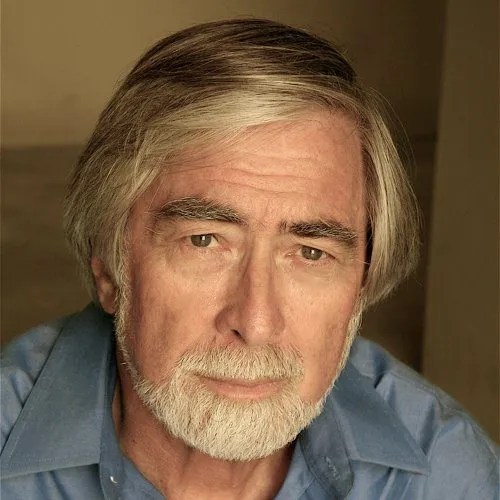
Robert Scheer, publisher of ScheerPost and award-winning journalist and author of a dozen books, has a reputation for strong social and political writing over his nearly 60 years as a journalist. His award-winning journalism has appeared in publications nationwide—he was Vietnam correspondent and editor of Ramparts magazine, national correspondent and columnist for the Los Angeles Times—and his in-depth interviews with Jimmy Carter, Richard Nixon, Ronald Reagan, Bill Clinton, Mikhail Gorbachev and others made headlines. He co-hosted KCRW’s political program Left, Right and Center and now hosts Scheer Intelligence, an independent ScheerPost podcast with people who discuss the day’s most important issues.
Editor’s Note: At a moment when the once vaunted model of responsible journalism is overwhelmingly the play thing of self-serving billionaires and their corporate scribes, alternatives of integrity are desperately needed, and ScheerPost is one of them. Please support our independent journalism by contributing to our online donation platform, Network for Good, or send a check to our new PO Box. We can’t thank you enough, and promise to keep bringing you this kind of vital news.
You can also make a donation to our PayPal or subscribe to our Patreon.
